
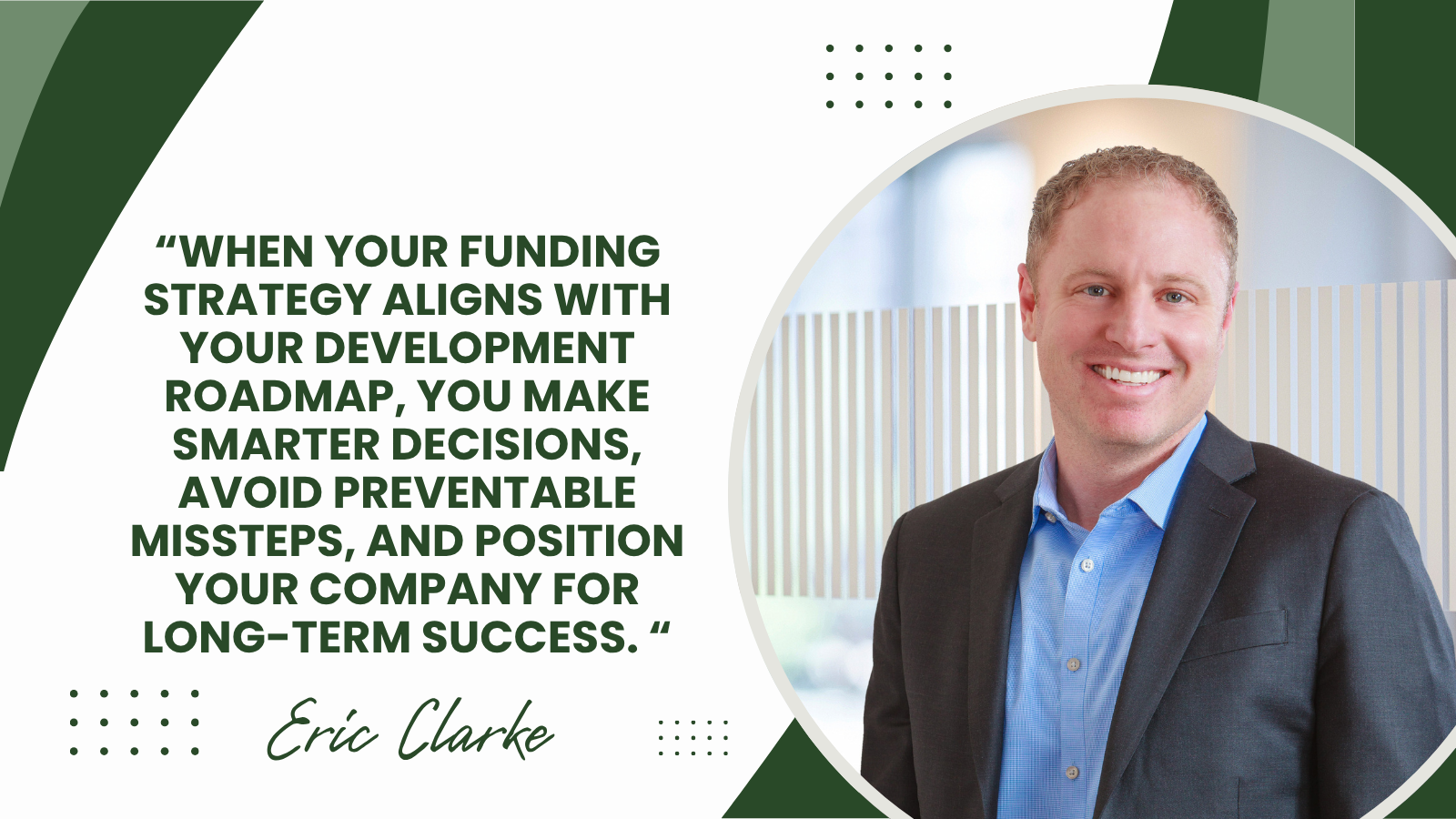
Authored By: Eric Clarke
Growing a company takes more than vision—it takes structure, clarity, and intentional decision-making. One of the biggest mistakes early-stage companies make is separating their development plan from their funding strategy. But in reality, these two pieces need to move in lockstep.
Here’s how to bring intention into every part of your growth and funding strategy:
Make Every Dollar Count
A capital raise should always have a purpose. It’s not just about extending your runway—it’s about powering the milestones that move your business forward. If you’re raising without a clear “why,” it’s harder for investors to understand the impact—and harder for you to stay on course.
Make your capital raise meaningful by tying it to:
- Product milestones – Launching a new feature, shipping an MVP, or scaling a core platform.
- Go-to-market plans – Hiring sales or marketing leads, building pipeline, or launching in a new region.
- Customer traction goals – Reaching your first 10 customers, hitting $1M ARR, or improving retention.
- Hiring key team members – Bringing on technical talent, executive leadership, or customer support.
When capital is linked to clear business outcomes, investors are more likely to get behind your vision—and you’re more likely to execute with focus.
Respect the Power of Timing
Timing isn’t just about speed—it’s about rhythm and reliability. Founders who build with intention understand that delays aren’t just internal issues—they’re signals to the outside world. Missed milestones, shifting targets, or vague updates can erode investor trust and make future raises more difficult.
Build credibility by treating time as a strategic asset:
- Set realistic timelines – Don’t overpromise to impress. Under-promise and overdeliver if possible.
- Create internal accountability – Assign owners to each milestone and keep the team aligned.
- Communicate early and clearly – Be upfront with investors and your team if something changes.
- Anticipate funding cycles – Know when investors are most active and position accordingly.
Being on time—and communicating well when you’re not—can be the difference between keeping momentum and losing it.
Build in Room to Breathe
Every startup hits unexpected bumps. What sets successful companies apart is how they plan for them. If your strategy is too tight—no buffer in the budget, no flexibility in the timeline—you’re setting yourself up for unnecessary stress and missed opportunities.
Build resilience by including margin in your planning:
- Add contingency to your budget – A 10–15% buffer can help absorb unexpected costs.
- Pad your timeline – Give yourself room for hiring delays, product tweaks, or customer pushback.
- Model downside scenarios – What happens if you miss your targets by 20%? Prepare now.
- Be transparent about it – Investors will appreciate your realism and foresight.
Planning for the unexpected doesn’t signal doubt—it signals maturity and adaptability.
Know What Your Cap Table Is Telling You
Your cap table tells the story of your ownership, and it should be just as thoughtfully managed as your budget or business model. Too often, founders wait until a priced round to understand dilution or future implications, only to realize they gave away more than they thought.
Treat your cap table like a strategic roadmap by:
- Modeling future capital raise rounds – Know what your Series A or B could do to founder ownership.
- Running multiple raise scenarios – Compare the impact of SAFE notes, convertible debt, or equity rounds.
- Tracking the option pool and employee equity – Plan ahead for hiring needs and retention.
- Using tools to stay organized – Cap table software can help you see changes clearly over time.
A clean, forward-looking cap table gives you leverage and builds investor confidence that you’re thinking long term.
Watch Out for These Growth Killers
Even great companies can stumble without intentional planning. The pitfalls are familiar, but that’s what makes them so dangerous—they happen quietly, often with the best of intentions.
Common missteps to avoid:
- Overpromising, underdelivering – Big goals don’t matter if you miss them consistently.
- Raising without progress – Asking for more capital without hitting key milestones raises doubts.
- Lack of timeline discipline – Slipping deadlines without explanation weakens momentum and trust.
- Unmanaged cap table – Too many instruments, unclear ownership, or ignored dilution can derail future rounds.
These aren’t rare. They’re patterns we see again and again. And they’re all preventable when you build with intention.
Understand What Investors Actually Want
Investors aren’t expecting perfection, but they are looking for founders who understand their business, can communicate a plan, and know how to manage resources.
You’ll stand out by:
- Doing what you say you’ll do – Follow-through builds more trust than any polished pitch.
- Treating your forecast as dynamic – Know how you’ve used capital and what’s next.
- Managing your cap table actively – Show awareness of how ownership decisions today affect the future.
- Adapting without drifting – Flexibility is key, but your vision should stay focused and clear.
What builds investor confidence isn’t just vision—it’s discipline, communication, and awareness.
Build with Intention
Raising capital isn’t the goal; it’s a tool. When your funding strategy aligns with your development roadmap, you make smarter decisions, avoid preventable missteps, and position your company for long-term success.
Evergreen Advisors’ Outsourced CFO team is your partner in building a financial strategy that supports every stage of growth. We help founders connect the dots between vision, execution, and funding—so you can raise confidently, manage wisely, and stay focused on building the business you set out to create. Ready to build with intention? Reach out today to start the conversation.