

Authored By: Patrick Guthrie, CFA
One of the first questions clients often have when considering a business valuation is simple: What will it cost?
The answer depends on the engagement. Valuation fees are influenced by several factors, including the purpose of the valuation, the complexity of the business, and the level of analysis and documentation required.
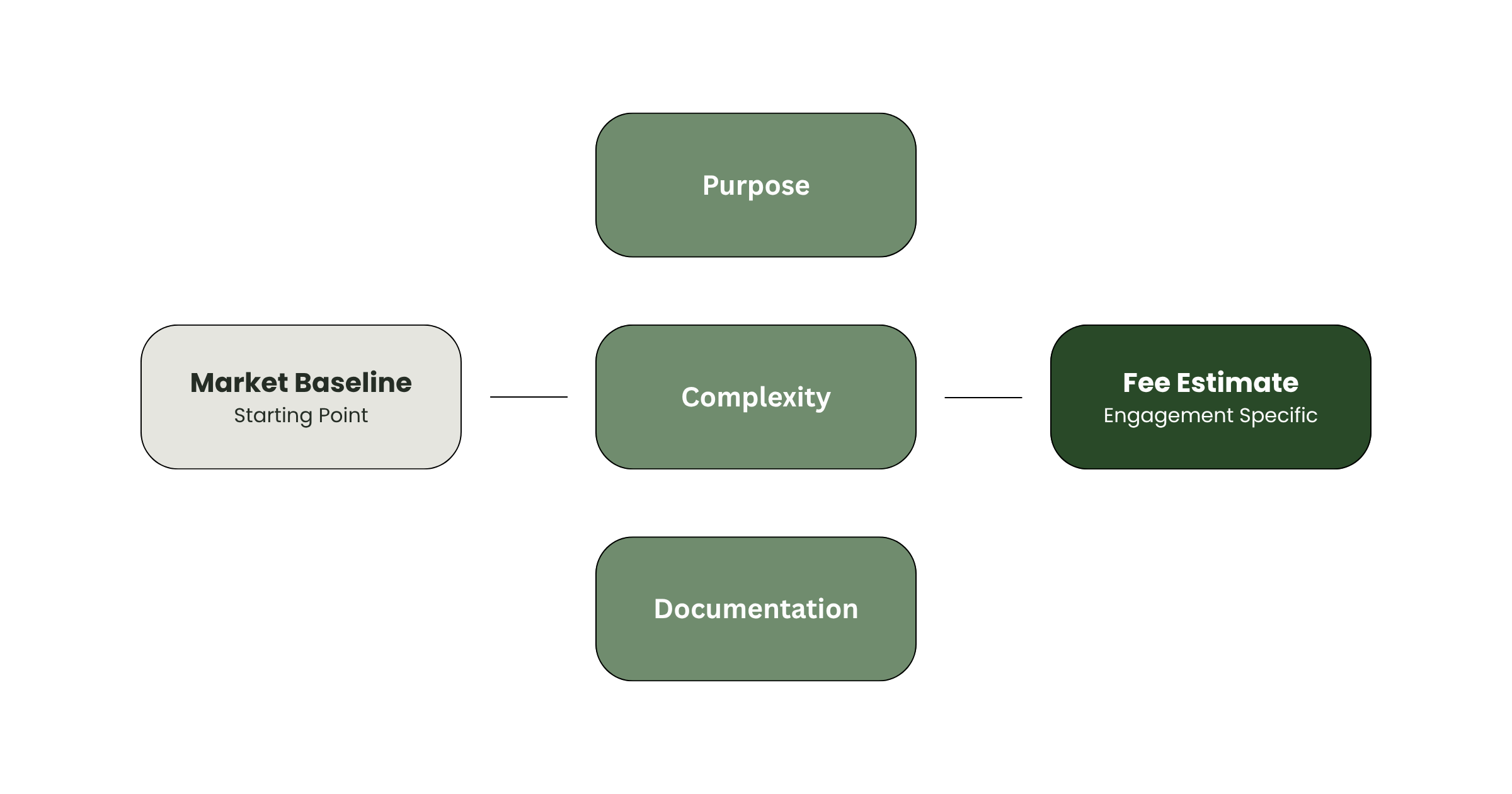
There is no one-size-fits-all valuation fee. The scope of the engagement should determine the level of work required and, ultimately, the cost.
What Goes into a Valuation Fee?
1. Prevailing Market Rates
Valuation services are competitively priced. Firms operate in the same market, follow the same professional standards, and draw on the same data sources, and that shared footing gives the market a working baseline for what a given type of engagement costs. The baseline is a starting point, not a quote.
An appraiser prices from there according to what the specific engagement requires, and the factors that follow are what move a fee up or down from it. In practice, an appraiser sizes a fee by working backward from the deliverable, estimating the hours each phase of the analysis will require and the level of the professionals performing them.
2. The Scope and Purpose of the Valuation
Why do you need the valuation? This is one of the most important questions in determining the scope of work. A valuation prepared for general business planning may look very different from one prepared for:
- Estate and gift tax planning
- A business sale or transaction
- Shareholder disputes
- Financial reporting
- Tax compliance
- Employee Stock Ownership Plans (ESOPs)
Different purposes can require different levels of analysis, documentation, and reporting. Learn more about strategic planning through the lens of business valuation.
3. The Complexity of the Business
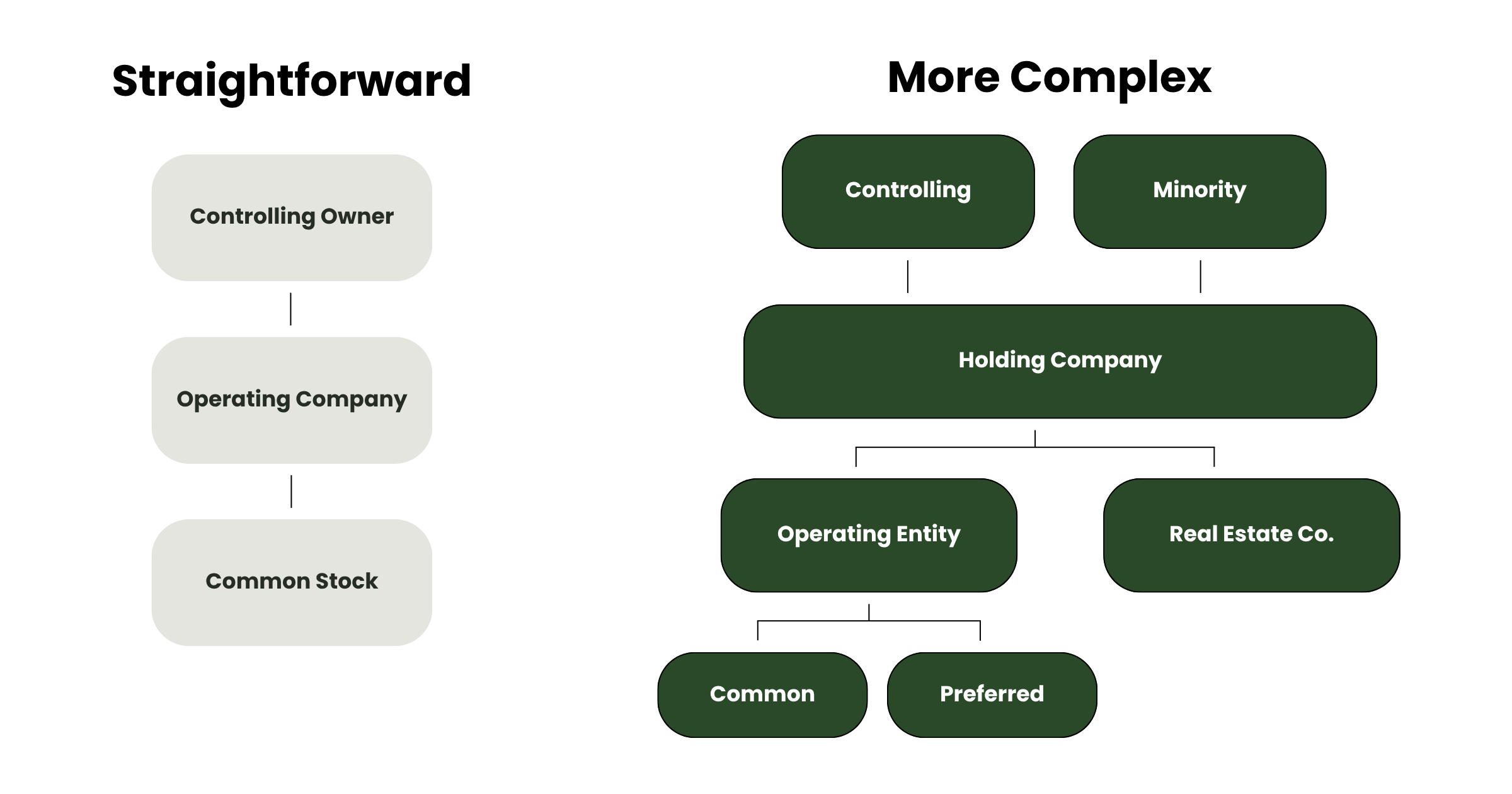
The business itself can also have a significant impact on the fee. A company with straightforward operations and financials may require less analysis than a business with multiple entities, complex ownership structures, diverse revenue streams, or other factors that require additional investigation.
Consider two engagements at opposite ends. One is a single operating company with one class of common stock, and a controlling owner. The other is a holding company with several subsidiaries including an operating entity, common and preferred classes of equity, and a minority interest with associated discounts. Both are business valuations, but the second requires analysis at each entity level, an allocation among the equity classes, and support for the discounts applied. The fee estimate will differ as the scope of work is different.
4. The Level of Documentation Required
Not every valuation requires the same type of deliverable. For example, a valuation prepared for tax compliance purposes requires more extensive narrative support and documentation than one prepared primarily for internal planning. The additional analysis and reporting can therefore affect the overall fee.
What Clients Should Know
Firm size affects price more than it affects the analysis
National firms generally charge a meaningful premium over smaller independent practices for comparable work. That premium tends to reflect breadth rather than depth. A national platform can bring in specialists, which are sometimes needed and other times not. The analysis itself is governed by the same professional standards regardless of who performs it, and the credentials behind the signature are usually the same.
Scope is a shared understanding
Ownership structures, related entities, pending transactions, and prior valuations all affect the work required. Sharing information upfront gives the appraiser what is needed to price the engagement accurately, and it is the most reliable way to avoid a change of scope fee once work is underway.
Engaging early costs less than engaging for a quick turnaround
Compressed timelines carry premiums. A valuation started several weeks or months before a filing deadline is a different engagement from one started several days before it, even though the analysis is identical.
Consider more than the fee
A valuation is sometimes required rather than requested, and when it feels like a compliance item, price becomes the easiest thing to compare. It is also not that informative. What determines whether an engagement goes well is whether the appraiser is responsive, understands what the valuation is being used for, and can stand behind the conclusion when someone asks about it later, whether that is a board, a beneficiary, regulator, an examiner, or a buyer. None of that appears in a fee quote, and all of it becomes apparent once the work is underway. Reputation, responsiveness, and a clear grasp of your situation are worth more than the difference between two proposals.
Let’s Talk About Your Situation
Whether you are planning a transaction, addressing a tax or estate planning need, or simply looking to better understand the value of your business, our team can help determine the appropriate valuation approach for your situation.
Contact our team to discuss your valuation needs.